
RECEIVE
Receive the report
Open a private case for a home, business, or permitted location.

FOR PARANORMAL GROUPS
Give case managers and field investigators a shared system for receiving private requests, preparing the work, collecting observations, and reviewing what happened.
FOR THE CASES THAT BEGIN WITH A PHONE CALL
A private investigation starts well before the team arrives. A case manager hears the client’s account, documents events and concerns, separates reported experiences from known conditions, and prepares investigators for the site.
Ghost Hunter’s case-work direction is designed to carry that context forward without turning a sensitive report into public content.
THREE OPERATING ROLES
Receive the request, preserve consent and the client’s account, plan the work, and determine what belongs in the field briefing.
Use a consistent field kit, coordinate through Comms, and preserve observations with their original context.
Compare field observations, keep ordinary explanations visible, and prepare a measured response for the client without overstating the evidence.
PRIVACY IS PART OF THE METHOD
Private names, addresses, statements, floor plans, access instructions, recordings, and evidence stay inside the approved case scope.
A case manager keeps safety and access information visible while limiting suggestive background details and sharing each part of the case with the people who need it.
Keep the client’s words, the consent scope, known conditions, and the difference between recollection and measurement.
Give the client an organized account of the visit, the observations, the ordinary explanations, and the questions that remain open.
CREW FIELDWORK
Field plans, Comms, linked local case views, and the Field Console keep timing and context visible without flattening separate observations into one unexplained event.
EVIDENCE REVIEW
Mark interference while it happens. Link review notes to the original source. Keep unavailable or moved material labeled. Treat unresolved observations as questions to revisit, not a score to inflate.
REMOTE CONSOLE FOR TEAMS
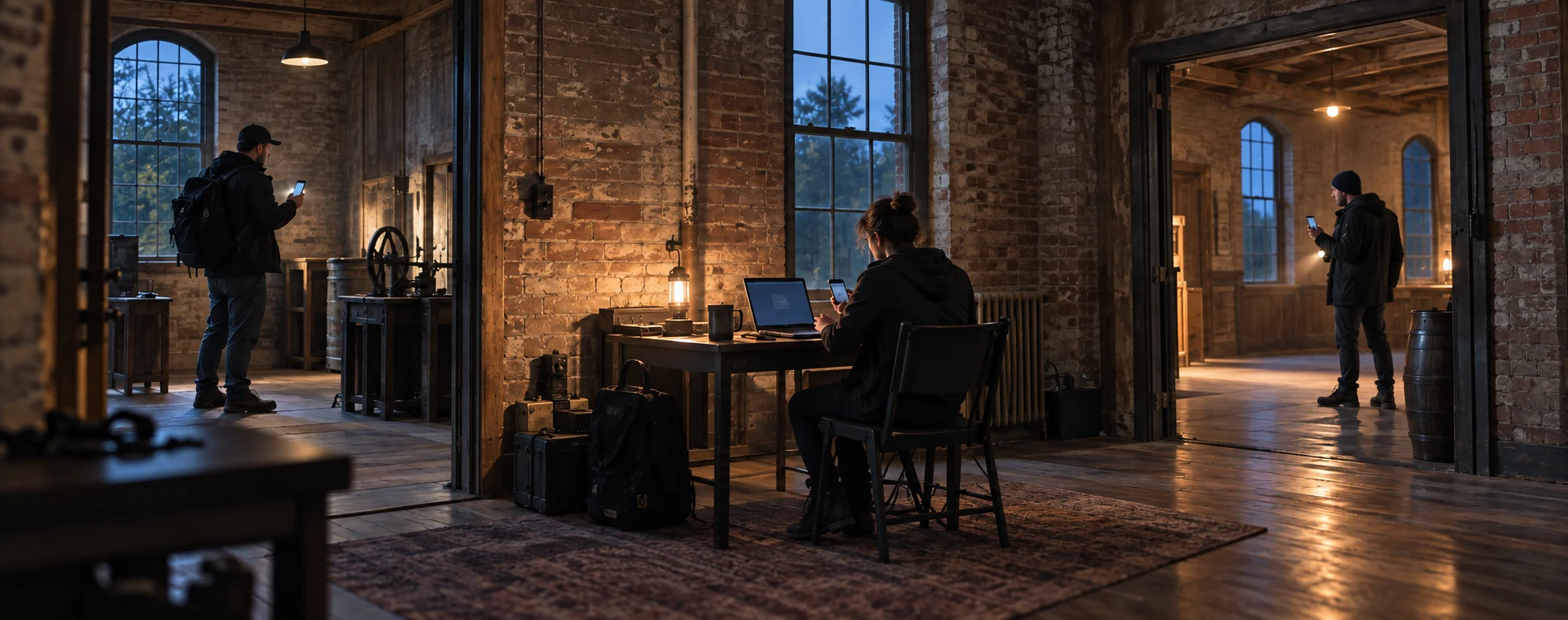
A paired computer can follow the permitted field picture while investigators keep their phones in the rooms where the work is happening.
Compare live summaries, room labels, timing, field plans, selected records, and guide or team messages without flattening each investigator’s source into one signal.
FOR INVESTIGATION GROUPS
Connect private intake, preparation, field observations, review, and client follow-up without turning sensitive casework into public content.
INVESTIGATE RESPONSIBLY
Visit public areas during permitted hours, or private places where you have permission. Respect staff, residents, memorials, and other visitors. Never enter an unsafe or restricted area, and never rely on the app as your only navigation or safety tool.